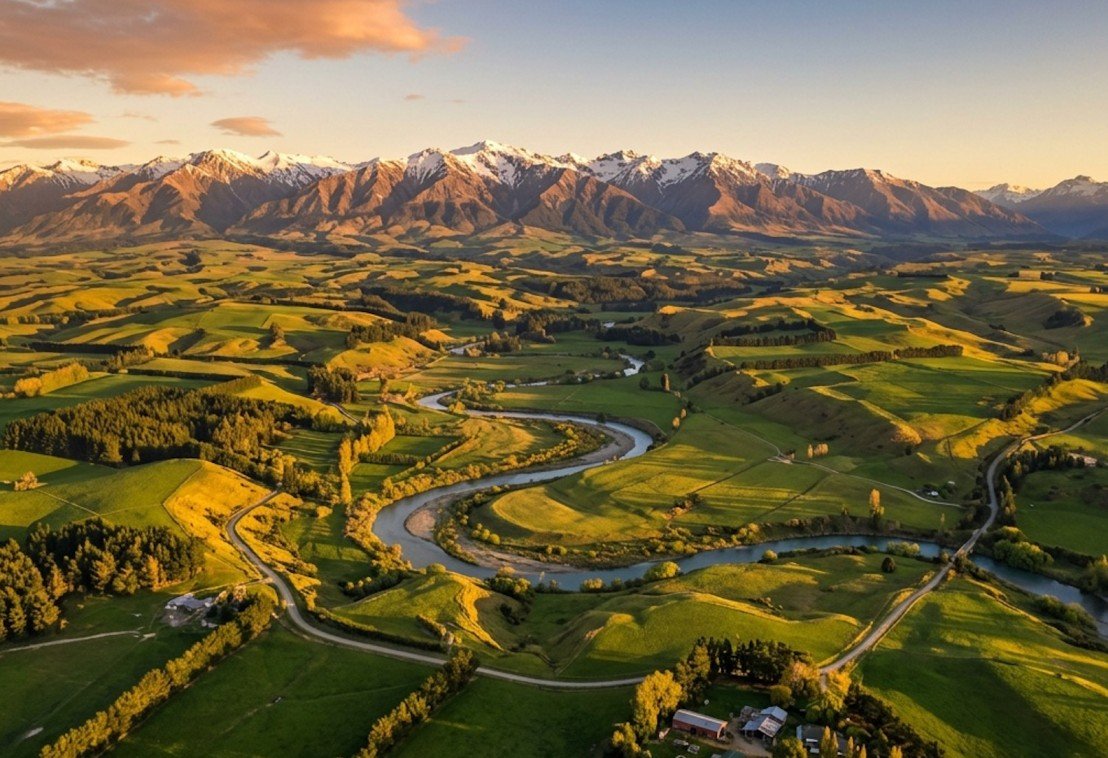
Three towns, three very different personalities. Here is how to figure out which one is actually right for you.
North Canterbury is having a moment. People have been moving up from Christchurch in steady numbers for years now, and the decision that trips most of them up is not whether to make the move but where exactly to land. Rangiora, Kaiapoi, and Woodend all sit within a reasonable drive of each other, all offer affordability that Christchurch cannot match, and all have that semi-rural quality of life that brings people north in the first place.
But they are not the same place. Not even close. The right town for a young family with school-age kids and a preference for a busy high street is not necessarily the right town for someone who wants a riverside lifestyle and a short commute. Understanding the differences matters, and there are real ones worth knowing about before you start attending open homes.
Here is an honest look at all three.
Rangiora
The biggest town in North Canterbury. The one with the most of everything.
Rangiora is the main event. With close to 19,300 residents and growing, it is the commercial and social hub of North Canterbury in a way that the other two towns simply are not. If you want the widest range of schools, the most varied hospitality scene, proper retail shopping, a hospital, and a full diary of community events without needing to drive to Christchurch for any of it, Rangiora is the obvious answer.
The High Street has genuine character. There are good cafes, a cinema, boutique shops, and an arts and cultural scene that has grown steadily as the town’s population has diversified. The cafe scene in particular punches well above its weight for a town this size. Housing is more affordable than Christchurch, with the average sitting around $680,000, and there are new subdivisions like Bellgrove coming online that give buyers options across a wide range of budgets and sections.
For families, Rangiora is hard to argue against. Rangiora High School is one of the larger and more established secondary schools in the region with a roll of around 1,679 students, and there are multiple well-regarded primary schools spread across the town. The Rangiora Health Hub, opened in 2015, is the largest hospital in North Canterbury and houses maternity services alongside a range of specialist outpatient care. Having that kind of medical infrastructure locally matters more than people realise until they need it.
What Rangiora does well
Everything in one place. If convenience, choice, and services matter to you, Rangiora wins without much of a contest. The town is 35 minutes from Christchurch by car and has its own bus connection to the city several times daily. You get the regional lifestyle without giving anything up in terms of amenity. The social calendar is full, the sporting clubs are well established, and there is enough going on that you never feel like you are missing out.
What Rangiora does not do quite as well
It is the busiest and most built-up of the three. If your vision of North Canterbury involves quiet streets, a slower pace, and a strong sense of knowing your neighbours, Rangiora can feel a bit too much like a smaller city. The growth has been fast and some of the newer subdivisions on the fringes reflect that, with the tight street layouts and uniform house designs that come with rapid residential development anywhere. It is also the furthest inland, so the coast requires a deliberate trip rather than a casual after-dinner walk.
Rangiora is the right pick for: families who want proximity to services, people who want to work locally rather than commute, first home buyers who want established infrastructure and community, and anyone moving from a city who does not want to feel like they have left civilisation behind.
Kaiapoi
The riverside town that has quietly rebuilt itself into something really good.
Kaiapoi gets undersold. Sitting 17 kilometres north of central Christchurch, it is the closest of the three towns to the city and by far the most convenient for anyone who needs to commute regularly. The Northern Corridor motorway, completed in 2020, has made the drive to Christchurch genuinely fast, and there is also a regular half-hourly bus service running between Kaiapoi, Rangiora, and central Christchurch that makes it one of the more connected towns in the region.
What makes Kaiapoi distinct is the river. The Kaiapoi River runs through the heart of the town and it shapes the whole character of the place. There are walking and cycling tracks along the riverbank, boat ramps, and a general sense that the water is part of daily life here in a way you do not get in either Rangiora or Woodend. The river is deep enough for boating and the nearby Waimakariri River Regional Park gives residents access to kayaking, fishing, cycling, and off-road trails. Pines Beach is a short drive away.
Kaiapoi was hit harder than either Rangiora or Woodend by the 2010 and 2011 Canterbury earthquakes, with large areas condemned to the residential red zone. That was a genuinely difficult chapter for the town and its community. What has emerged on the other side of it, though, is a place that has been substantially rebuilt and reinvested, with new subdivisions like Silverstream bringing a fresh wave of residents and energy. The average house price sits around $643,000, making it the most affordable of the three on this list.
What Kaiapoi does well
Location and liveability. If your job is in Christchurch and you want a genuine town to come home to rather than a suburb, Kaiapoi hits that balance better than anywhere else in this part of North Canterbury. The commute is manageable, the town has its own high school and a solid range of primary schools, and the river lifestyle is something genuinely different that residents talk about with real affection. The sense of community here is strong, partly because the town went through something hard together and came out the other side.
What Kaiapoi does not do quite as well
The town centre, while improving, does not have the same retail depth or hospitality range that Rangiora does. Some of the earthquake rebuild areas can feel a bit patchy in terms of the mix of old and new. And while Kaiapoi has good local amenities, anyone wanting a full-service regional hub will still find themselves driving to Rangiora for some things.
Kaiapoi is the right pick for: commuters who want to keep a foot in Christchurch, outdoor enthusiasts drawn to the river and coast, buyers looking for the most affordable entry point of the three, and anyone who values a strong community identity built over time.
Woodend
The fastest growing community in Waimakariri, and arguably the most underrated.
Woodend is the quiet achiever of North Canterbury. With a population of around 5,470 and growing fast thanks to the Ravenswood subdivision on its northern fringe, it sits neatly between the two larger towns, 6.6 kilometres east of Rangiora and 6.3 kilometres north of Kaiapoi. What it trades in urban amenity it more than makes up for in lifestyle. Woodend sits between the Waimakariri and Ashley rivers, is within walking distance of Pegasus, and is closer to the coast than either of the other two towns on this list.
The Tuhaitara Coastal Park is essentially on the doorstep, with walking and mountain biking trails that link Woodend Beach, Pegasus Town, and Waikuku Beach. For anyone who wants to live somewhere that feels genuinely rural and coastal without being remote, this pocket of North Canterbury delivers something the other towns simply cannot match. State Highway 1 runs directly through Woodend, putting Christchurch airport around 25 minutes away and the city centre not much longer.
Ravenswood is worth understanding if you are considering Woodend. It is a large planned subdivision on the northern edge of town that will eventually house around 3,500 people and include commercial buildings, a supermarket, and community facilities. Much of the development is already built out and operational. It is modern, well-designed, and brings a level of new infrastructure and services that makes Woodend a more complete place to live than it was even five years ago.
What Woodend does well
Lifestyle. If the appeal of North Canterbury for you is primarily about space, nature, and a slower rhythm to daily life, Woodend and its surroundings deliver that more completely than the busier towns. The coastal access is real and close. The community is genuinely tight-knit in the way that smaller towns often are. The median age here skews a little older than the other two towns, which tells you something about the kind of person the place attracts: people who have made a deliberate choice to slow down and live better.
What Woodend does not do quite as well
The State Highway 1 traffic through the middle of town is a genuine issue and one that residents have been vocal about for years. Until the proposed bypass is funded and built, the volume of traffic on the main road is a daily reality of living here. For services and amenities, you will rely on Rangiora and Kaiapoi for most things beyond the basics, though Ravenswood is steadily addressing that. There is currently no secondary school in Woodend, meaning high school students travel.
Woodend is the right pick for: people who prioritise lifestyle and the outdoors above all else, those drawn to coastal living without the coastal price tag, buyers who want newer housing stock in a planned community, and anyone looking for that rarest of things: a place that still feels like it is just finding itself.
So, which one?
There is no wrong answer here, which is part of what makes North Canterbury such an easy region to recommend. The real question is what you are optimising for.
If you want everything close by and a town with enough going on that you never feel isolated, Rangiora is your pick. If your job is in Christchurch and you want the best of both worlds, Kaiapoi is hard to beat. And if you are after space, coast, and a lifestyle that genuinely feels different from the city you left behind, Woodend and its surroundings offer something the others simply do not.
All three are growing. All three are investing in their infrastructure. And all three are full of people who made exactly this decision and have not looked back.